




Southern California is facing one of its most intense stretches of heat this year as dangerously high temperatures spread across Los Angeles, Ventura, San Bernardino and San Diego counties.
The National Weather Service issued an Extreme Heat Warning for large portions of the region beginning Tuesday, August 25, with the warning expected to remain in effect through 8 p.m. Friday.
Forecasters are warning residents that temperatures could reach dangerous levels even in areas that typically benefit from cooler coastal conditions.
Parts of Los Angeles County, including Downtown Los Angeles, Beverly Hills, Hollywood, Santa Monica, Malibu, Long Beach, Torrance and Culver City, are included in the warning area.
Temperatures in some coastal and inland coastal communities could climb as high as 102 degrees during the heat event.
Farther inland, conditions could become even more intense.
Earlier forecasts indicated that portions of the San Fernando Valley could see temperatures between 100 and 110 degrees as strong high pressure settles over Southern California. Forecasters have described the current stretch as likely to become the hottest week of the year for many parts of Los Angeles County.
The heat is also extending well beyond Los Angeles.
The National Weather Service has issued Extreme Heat Warnings across portions of San Bernardino County and San Diego County, where some inland valleys could reach between 105 and 110 degrees by Thursday and Friday.
The unusual intensity of the heat is being driven by a powerful area of high pressure combined with shifting winds that are allowing temperatures to rise dramatically across coastal valleys and inland communities.
While Southern California residents are accustomed to warm summer weather, prolonged periods of extreme heat can create serious health risks.
The National Weather Service warns that heat related illnesses increase significantly during extreme heat events.
Residents are being encouraged to drink plenty of water, remain inside air conditioned buildings when possible, limit time in direct sunlight and check on relatives, neighbors and anyone who may be especially vulnerable to high temperatures.
Older adults, young children, people with health conditions and individuals working outdoors can face increased risks during extended periods of extreme heat.
Pets should also never be left inside parked vehicles, even for short periods of time.
Temperatures inside a vehicle can rise rapidly and become dangerous within minutes.
The current heat wave is affecting daily life across Southern California.
Schools, outdoor workers, restaurants, businesses and residents are adjusting schedules and activities as temperatures rise during the afternoon.
Authorities have also urged people to reduce strenuous outdoor activity during the hottest parts of the day.
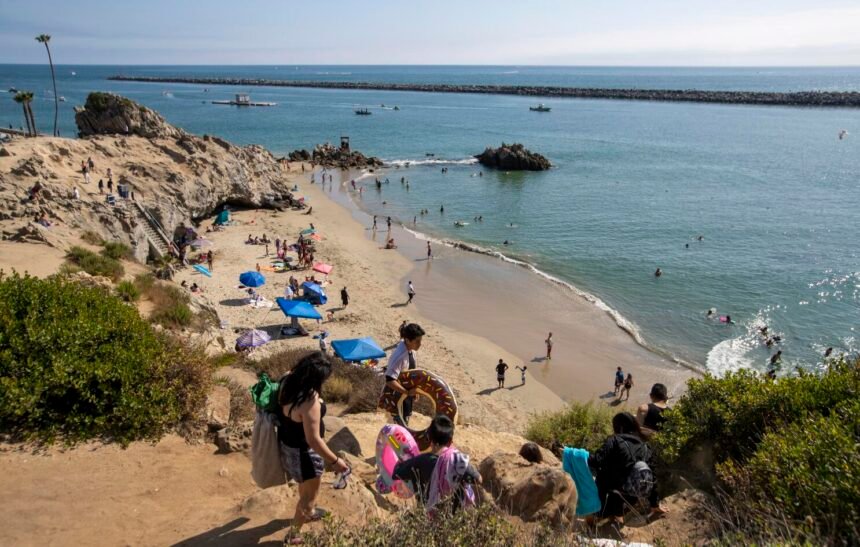
Even normally cooler beach communities are experiencing unusually warm conditions.
Forecasters previously said coastal communities could reach the 80s and 90s, while locations only several miles inland could experience triple digit temperatures.
The lack of significant overnight cooling is another concern.
When temperatures remain elevated overnight, the body has less opportunity to recover from daytime heat, increasing the potential for heat related health problems during a prolonged event.
Southern California is also dealing with increased wildfire concerns as vegetation remains dry across many areas.
Extreme temperatures can quickly dry vegetation further, creating conditions where fires may spread more aggressively if they ignite.
On Tuesday afternoon, a brush fire broke out near Perris in Riverside County during the dangerous heat, prompting evacuation orders and warnings in surrounding areas. The fire had grown to approximately 57 acres shortly after it began, according to authorities.
The combination of heat, dry vegetation and increased electricity demand is expected to keep emergency agencies on alert throughout the week.
Los Angeles city and county agencies have been preparing personnel and resources as officials monitor the possibility of heat related emergencies.
Residents who do not have access to air conditioning are encouraged to seek cooling centers, libraries, shopping centers or other public indoor spaces during the hottest hours.
Hydration is especially important.
Health officials generally recommend drinking water regularly throughout the day rather than waiting until someone feels thirsty.
Outdoor workers should take frequent breaks whenever possible and seek shade when temperatures become excessive.
The National Weather Service says the most dangerous conditions are expected to continue through Friday, although unusually warm weather may remain across portions of Southern California into the weekend.
For millions of Southern California residents, the message from forecasters is simple.
Take the heat seriously.
With temperatures reaching levels that can become dangerous quickly, staying hydrated, limiting sun exposure and checking on vulnerable family members and neighbors could make an important difference during one of the hottest periods of the summer.