



Southern California beaches are preparing for several days of powerful waves, dangerous rip currents, and possible coastal flooding as Hurricane Genevieve sends a strong southerly swell toward the region.
The storm remains far from the California coastline, but its influence is expected to be felt from San Diego County through Orange County, Los Angeles County, Malibu, and Ventura County. Coastal communities are being advised to prepare for hazardous ocean conditions that could continue through Saturday.
As of early Tuesday, July 28, Hurricane Genevieve remained a powerful major hurricane over the eastern Pacific Ocean. The storm was gradually losing strength as it moved northwest, but it continued to generate a large amount of energy across the ocean. Genevieve briefly reached Category 5 strength on Monday, becoming the first hurricane of that intensity in the eastern Pacific since Hurricane Kristy in 2024.
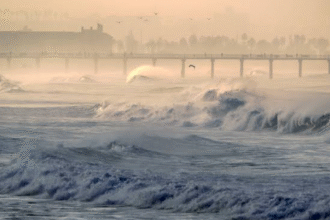
Although Genevieve is not expected to make landfall in Southern California, the waves created by the hurricane can travel hundreds of miles beyond the storm itself. Those waves are expected to arrive along the coast as a powerful and organized swell.
The National Weather Service has issued beach hazard statements, high surf advisories, and coastal flood advisories for several Southern California coastal areas.
In San Diego and Orange counties, waves between three and six feet are expected during the first portion of the event, with occasional sets reaching seven feet. Conditions are forecast to become more intense beginning Wednesday evening as the main swell from Hurricane Genevieve reaches the coastline.
South and southwest facing beaches in San Diego and Orange counties could experience breaking waves between five and eight feet, with some sets reaching approximately nine feet. West facing beaches are expected to see waves between three and six feet.
The National Weather Service said the most powerful part of the swell is expected to build late Wednesday and continue through Thursday. Ocean conditions should begin gradually improving late Saturday and into Sunday.
Los Angeles and Ventura County beaches are also expected to experience large waves and dangerous rip currents. Forecasts call for breaking waves between four and eight feet, with the highest surf expected at beaches directly exposed to the southerly swell.
The high surf advisory for Ventura County beaches, the Malibu coast, and Los Angeles County beaches is scheduled to begin Wednesday evening and continue through Saturday afternoon. A coastal flood advisory will also be in effect during much of that period.
Minor flooding may occur around evening high tides, particularly in vulnerable areas such as beachfront parking lots, walkways, low lying roads, and sections of the shoreline. Significant damage to roads and buildings is not currently expected, but isolated road closures may occur if water reaches coastal streets.
Forecasters are especially concerned about the combination of large waves and high evening tides. Water levels between approximately six and seven feet are expected at certain locations, increasing the possibility of flooding on Wednesday and Thursday evenings.
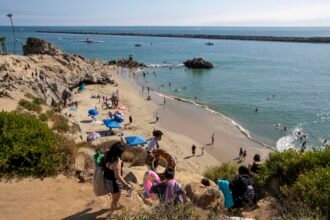
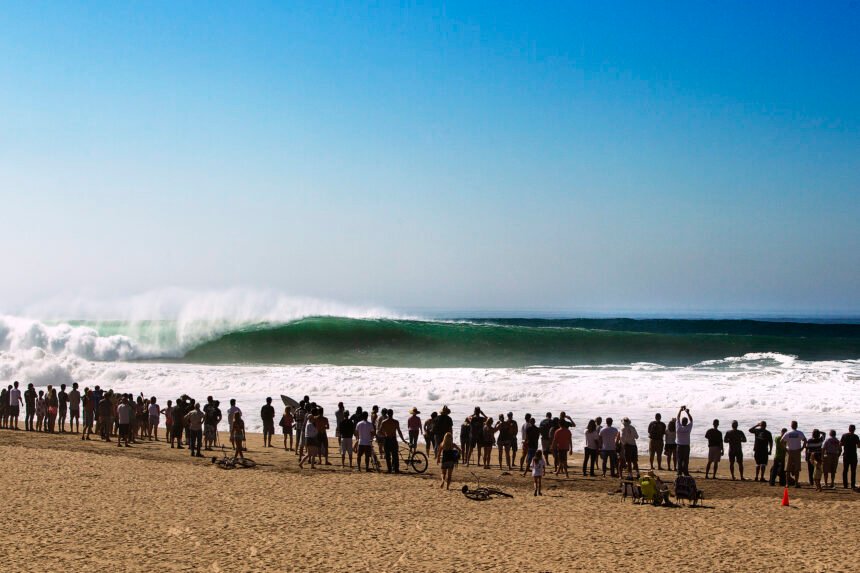
While the powerful waves may attract experienced surfers, officials are warning that the conditions could be dangerous for swimmers, beginning surfers, and anyone standing near rocks, jetties, docks, or the waterline.
Rip currents are narrow channels of fast moving water that travel away from the beach. They can quickly pull swimmers into deeper water, even when conditions appear manageable from shore. Large breaking waves can also knock people down, sweep them from rocks, and capsize small boats operating near the coastline.
The National Weather Service is encouraging inexperienced swimmers to remain out of the water while the advisories are active. Visitors who choose to enter the ocean should stay near an occupied lifeguard tower and follow all posted warnings.
Beachgoers should avoid climbing on jetties and coastal rocks during the swell. These structures can become especially dangerous when struck by unexpectedly large waves. Even people standing well above the normal waterline may be surprised by a powerful set.
Residents and visitors should also avoid driving through flooded coastal roads or around barricades. Water covering a roadway may be deeper or more forceful than it appears.
Families planning trips to the beach should check local conditions before leaving home. Conditions can vary significantly from one beach to another depending on the direction of the coastline and its exposure to the incoming swell.
South facing beaches are expected to receive some of the largest waves because they will be more directly exposed to the energy arriving from Hurricane Genevieve. Beaches protected by islands, points, or other coastal features may experience smaller waves, although dangerous currents may still be present.
The swell arrives during the height of the summer beach season, when coastal areas are typically crowded with swimmers, surfers, families, and visitors. Lifeguards may close sections of the water or restrict swimming if conditions become too dangerous.
People visiting Southern California beaches through Saturday should watch for warning flags, listen to lifeguard instructions, and remain aware that a quiet period between waves does not necessarily mean conditions are safe.
Hurricane Genevieve is expected to continue weakening as it moves over cooler ocean water and farther west across the Pacific. However, the waves already generated by the hurricane will continue traveling toward Southern California after the storm begins losing strength.
For coastal communities, the coming days will provide another reminder that a hurricane does not have to reach land to create dangerous conditions. From powerful surf and rip currents to erosion and minor flooding, Genevieve’s distant influence will be visible along much of the Southern California shoreline.
Officials are urging residents and visitors to admire the waves from a safe distance, respect beach closures, and leave ocean rescues to trained lifeguards.