




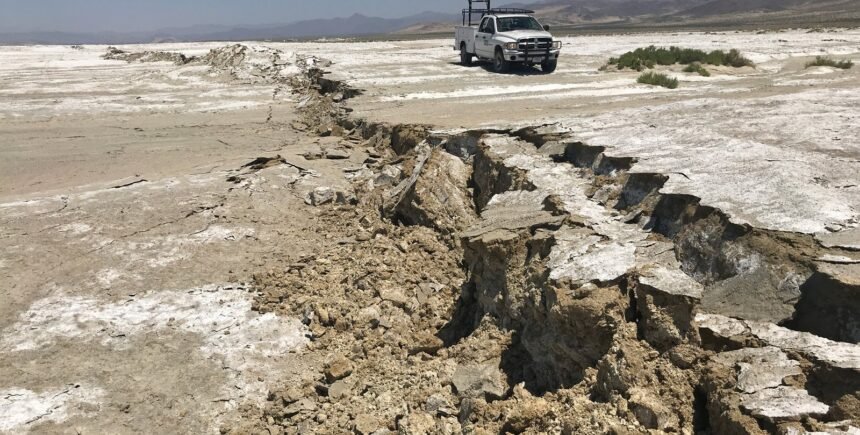
LOS ANGELES, CALIFORNIA A swarm of approximately 90 small earthquakes rattled parts of South Los Angeles from Friday night into Saturday, September 12, drawing renewed attention to one of Southern California’s significant fault systems.
According to data from the United States Geological Survey, the earthquakes were concentrated around the communities of Lennox and Westmont. The sequence began at approximately 8:05 p.m. Friday and continued through Saturday afternoon, with magnitudes ranging from 1.0 to 2.7.
Although the individual earthquakes were relatively small, residents across a wider portion of Los Angeles County reported feeling light shaking. Reports came from areas including Crenshaw, Huntington Park, Bell, West Adams, Mid City and Gardena.
The earthquakes were clustered near the Newport Inglewood Fault Zone, a major fault system stretching from the Los Angeles area through Orange County toward Newport Beach. The fault has long been closely studied by seismologists because of its location beneath heavily populated portions of Southern California.
Saturday’s activity follows a magnitude 3.2 earthquake that struck along the same general fault zone near Compton last week, making the latest sequence especially noticeable to residents already alert to seismic activity in the region.
Scientists caution, however, that a cluster of small earthquakes does not mean a larger earthquake is about to occur. The USGS says scientists currently cannot predict the exact time, location and magnitude of a future major earthquake, and earthquake swarms frequently occur without being followed by a significant event.
Research into the Newport Inglewood Fault has nevertheless underscored its importance to Southern California earthquake preparedness. Previous geological research has found evidence of powerful prehistoric earthquakes associated with the fault system, highlighting why scientists continue to closely monitor seismic activity throughout the region.
For Southern California residents, the latest swarm is another reminder of the region’s constant seismic activity and the importance of being prepared. Emergency officials generally recommend that households maintain emergency supplies, secure heavy furniture and understand the safest locations inside their homes should stronger shaking occur.
As of Saturday evening, monitoring of the region continued through the USGS earthquake network. While the recent swarm should not be interpreted as a prediction of a major earthquake, its location beneath one of the nation’s most densely populated metropolitan areas is likely to keep the activity under close observation.
SoCal Newspaper will continue to follow significant seismic activity and public safety developments across Southern California.
I can also monitor this earthquake swarm and alert you if there is a significant new quake or an official USGS update.