



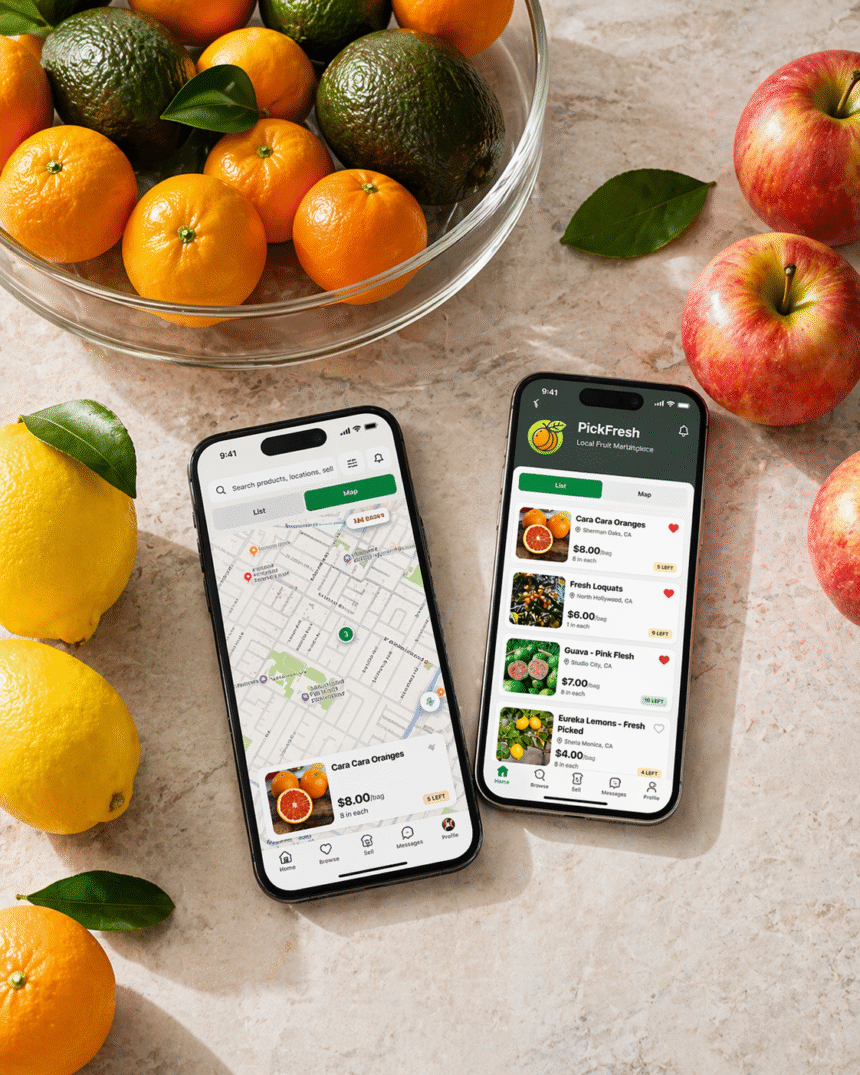
In a world where people are becoming more aware of what they eat, where it comes from, and how fresh it really is, PickFresh is positioning itself as an app with a simple but powerful mission: helping people buy and sell homegrown fruit in California. Instead of relying only on traditional grocery stores, PickFresh appears to create a direct connection between local fruit growers and nearby buyers who want fresher produce, stronger community ties, and a more personal food buying experience.
From the first look at the PickFresh Instagram profile, the brand makes its message clear. It is not trying to look like a cold corporate grocery platform. It feels local, bright, approachable, and rooted in real people. The profile highlights homegrown fruit, featured sellers, giveaways, fresh lemons, avocados, oranges, and the idea of supporting local growers. With more than five thousand followers and a growing library of posts, PickFresh seems to be building not just an app, but a community around fresh fruit and local food culture.
The concept behind PickFresh is especially relevant in California, a state known for its incredible variety of fruit trees, backyard gardens, small farms, and neighborhood growers. Many Californians have citrus trees, avocado trees, apple trees, persimmon trees, peach trees, lemon trees, and other produce growing right at home. Often, these trees produce more fruit than one household can use. That extra fruit can fall to the ground, go uneaten, or become food waste. PickFresh offers a smarter possibility. It gives home growers a way to sell what they have, while giving buyers access to fruit that may be fresher than what they find in a regular store.
This is where the app’s value becomes very clear. Grocery store fruit often travels through long supply chains before it reaches the shelf. It may be picked early, stored, transported, handled by multiple distributors, and then displayed for shoppers days or even weeks later. Homegrown fruit, on the other hand, can come from a nearby tree, a local seller, or a neighbor’s backyard. That difference can matter. Freshly picked fruit often has better flavor, better texture, and a stronger connection to the place where it was grown.
PickFresh seems to understand that freshness is not only about taste. It is also about trust. When people buy from local sellers, they are often buying from someone with a direct relationship to the fruit. A seller may know when the tree was harvested, how the fruit was grown, and what makes it special. That kind of transparency can make the buying experience feel more human. Instead of simply grabbing fruit from a supermarket display, buyers can feel like they are participating in a local food exchange.
The app also appears to support a growing movement toward reducing food waste. One of the posts visible on the PickFresh profile mentions reducing food waste, which fits naturally with the brand’s purpose. Many neighborhoods have fruit trees that produce far more than homeowners can consume. Without a marketplace, much of that fruit may never reach people who would enjoy it. PickFresh can help turn excess backyard produce into something useful, valuable, and appreciated. Sellers can earn money from fruit that might otherwise go unused, while buyers can enjoy local produce at a potentially better level of freshness.
The social media presence of PickFresh also plays an important role in shaping the app’s identity. The Instagram grid is filled with energetic, short form content that feels designed for modern audiences. There are videos showing fruit, sellers, giveaways, app listings, and local moments. The content uses bold text, bright visuals, and simple messages such as “Way fresher than grocery store,” “Buying lemons from the PickFresh app,” and “Homegrown PickFresh.” These posts communicate the brand’s message quickly and effectively. They make the app feel easy to understand, easy to use, and connected to real everyday people.
Another strong part of PickFresh’s branding is the emphasis on supporting local sellers. One visible post says “PickFresh featured seller,” and another shows a person holding a PickFresh themed “Support Local” sign. This suggests that PickFresh is not only promoting fruit as a product, but also highlighting the people behind it. That matters because local marketplaces succeed when users feel seen, trusted, and valued. By featuring sellers, PickFresh gives growers a voice and helps buyers feel more comfortable purchasing from individuals in their area.
The app may also appeal to people who enjoy discovering unique local finds. Grocery stores usually offer standardized produce, but local sellers may have fruit varieties that are harder to find in major retail chains. A backyard avocado tree, a citrus tree in a family garden, or a small home orchard can offer fruit with a different character than mass distributed options. For buyers who care about flavor, seasonality, and local discovery, PickFresh could become a fun way to find fresh produce nearby.
There is also a community building angle that makes the app stand out. Buying fruit through a local marketplace can feel more personal than ordering from a large delivery service. It can introduce people to sellers in their city or neighborhood. It can encourage conversations about growing, harvesting, cooking, and sharing food. In a time when many digital platforms feel impersonal, PickFresh has the opportunity to make technology feel local and neighborly.
The app’s focus on California is also a smart starting point. California has the climate, produce culture, and local food interest needed for this kind of platform to grow. Many residents already value farmers markets, organic produce, backyard gardening, and sustainable living. PickFresh can fit naturally into that lifestyle by giving people a convenient way to access local fruit without needing to wait for a weekly market or rely only on traditional grocery options.
For sellers, PickFresh offers an appealing opportunity. A homeowner with extra lemons, oranges, avocados, apples, or other fruit can potentially turn that abundance into income. Instead of letting fruit go to waste, they can list it for buyers who are actively looking for fresh options. This could be especially useful during peak harvest seasons when trees produce more than expected. It gives everyday people a way to participate in the local food economy without needing a formal farm stand or business setup.
For buyers, the appeal is equally clear. They can search for fruit that is local, fresh, and possibly harvested much closer to the time of purchase. They can support people in their area and feel more connected to the food they bring home. For families, health conscious shoppers, food lovers, and people who care about sustainability, this kind of experience can feel more meaningful than a typical grocery trip.
PickFresh also has strong potential as a storytelling brand. Fruit is visual, colorful, seasonal, and emotional. People have memories tied to fruit trees, family gardens, summer harvests, homemade lemonade, fresh avocado toast, orange picking, and neighborhood sharing. By using social media to show real people and real fruit, PickFresh can create content that feels warm and authentic. The brand has the opportunity to become more than an app people download once. It can become a lifestyle platform around local freshness.
The Instagram profile also shows that PickFresh is actively encouraging downloads and participation. The bio says “Download it today,” and the website link is clearly displayed. This direct call to action makes the page practical. Visitors immediately understand what the app does and where to go next. The profile description is simple, clear, and memorable: “Buy and Sell Homegrown Fruit in CA.” That phrase communicates the entire concept in one sentence.
What makes PickFresh especially interesting is that it combines several powerful trends at once. People want fresher food. People want to support local sellers. People want to reduce waste. People want convenience. People want authenticity. PickFresh brings those ideas together through a marketplace designed around homegrown fruit. It takes something that has always existed, neighbors sharing or selling extra fruit, and gives it a modern digital home.
Of course, the long term success of an app like PickFresh will likely depend on trust, safety, quality, and ease of use. Buyers need to feel confident in the sellers and the fruit being offered. Sellers need a simple way to list their produce, communicate, and complete transactions. The app will need enough active users in each area to make the marketplace useful. But based on its branding and social media presence, PickFresh appears to be taking the right approach by making the idea friendly, visual, and easy to understand.
In many ways, PickFresh feels like a natural evolution of the local food movement. Farmers markets showed people the value of buying closer to the source. Delivery apps showed people the convenience of mobile marketplaces. PickFresh seems to combine both ideas by focusing on fresh homegrown fruit and making it accessible through an app. It gives local growers a platform and gives buyers another way to enjoy produce that feels personal, seasonal, and connected to their community.
The most compelling part of PickFresh is its simplicity. It does not need a complicated explanation. Someone has fresh fruit. Someone nearby wants fresh fruit. PickFresh helps connect them. That simple idea has the potential to create value for households, neighborhoods, and the environment.
As more people rethink how they shop for food, PickFresh could become a meaningful option for Californians who want something fresher than the standard grocery store experience. It celebrates homegrown produce, supports local sellers, and helps turn extra fruit into opportunity. In a state full of backyard trees and fruit loving communities, PickFresh has found a concept that feels timely, practical, and full of potential.
PickFresh is not just presenting fruit as food. It is presenting fruit as a local connection. It is showing that a lemon from someone’s tree, an avocado from a neighbor’s yard, or a bag of oranges grown nearby can be part of a larger movement toward freshness, sustainability, and community. That is what makes the app stand out. It gives people a reason to look beyond the grocery aisle and discover what is growing close to home.