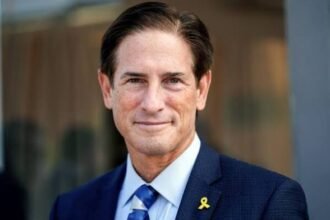




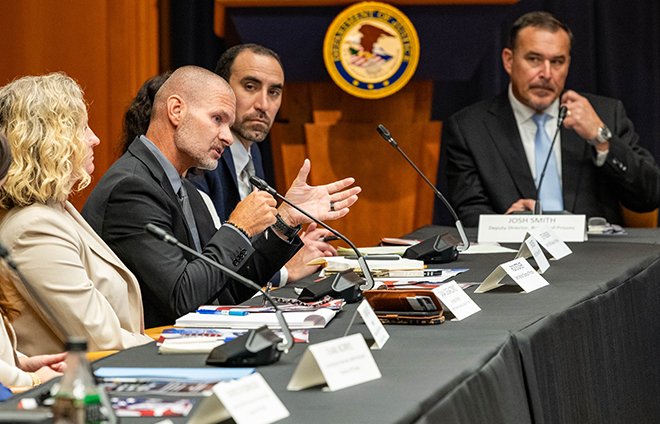
For many Southern California families, the federal prison system feels distant and impenetrable, a maze of acronyms and rules that decide when a loved one comes home. Yet inside that maze, one career corrections official has become a central figure in an effort to turn federal policy into earlier release dates, more home confinement, and a clearer path back to the community. His name is Rick Stover, and his work on the First Step Act is reshaping how the Bureau of Prisons handles time credits and early transitions to freedom.
Rick Stover’s path to the center of federal prison reform did not begin in Washington. He started his corrections career in the Virginia Department of Corrections before joining the Federal Bureau of Prisons in the late nineteen nineties as a case manager at Federal Correctional Complex Forrest City in Arkansas. From there he moved through a series of demanding roles as correctional programs specialist, unit manager, senior designator at the Designation and Sentence Computation Center in Texas, associate warden at multiple institutions, and eventually warden at Federal Correctional Institution Danbury in Connecticut.
That long tenure on the front lines became the foundation for his current national role. In twenty twenty four and twenty twenty five the Bureau of Prisons Director tapped Stover first as senior deputy assistant director at the Designation and Sentence Computation Center, then as a key leader charged with furthering the implementation of the First Step Act, and finally as special assistant to the Director. The appointment, announced this year, was described as part of a broader strategy to fully realize the promise of the First Step Act as a tool for safer facilities and better outcomes.
For families in Southern California that language has a very specific meaning. The First Step Act allows eligible federal prisoners to earn time credits for taking part in evidence based programs and productive activities. Those credits can be used to move people sooner into prerelease custody such as halfway houses or home confinement, or into supervised release under the supervision of probation officers. The law is national, but its impact is felt locally wherever people are waiting for their return home, including communities across Los Angeles, the Inland Empire, Orange County, and San Diego.
The challenge has never been only the statute on paper. It has been the math. For years families, advocates, and attorneys complained that the Bureau of Prisons time credit calculations were inconsistent and slow, leaving qualified people inside facilities months longer than they believed the law allowed. Federal judges have seen a wave of petitions arguing that time credits were miscalculated or not applied. In one Connecticut case a petitioner even challenged the Bureau’s failure to release him due to an alleged error in his First Step Act credits, naming then Warden Rick Stover as the respondent in his official capacity.
By the time Stover was elevated into a national leadership position the First Step Act had become both a symbol of hope and a source of frustration. Instead of shying away from that tension, he accepted an assignment that would place him at the heart of the problem: the creation and oversight of a First Step Act task force inside the Bureau of Prisons.
The task force, based at the Designation and Sentence Computation Center in Grand Prairie, has a straightforward but ambitious charge. It identifies people already in residential reentry centers who are eligible for home confinement. It manually calculates home confinement dates by stacking time credits from the First Step Act with those from the Second Chance Act. It passes those dates to residential reentry management offices across the country so that people can move into community placements sooner and beds in reentry centers can be freed for those still waiting.
In public statements the Bureau has acknowledged that the automated systems meant to handle these calculations have lagged behind the law. While programmers continue to rebuild the software that tracks every day of credit, Stover’s task force is using manual reviews as an emergency measure. He has described this as a way to “jump on the issue now” with a specialized team, with the goal of putting more people on home confinement for longer periods of time and easing the pressure inside crowded institutions.
That focus on home confinement has special resonance in Southern California, where the cost of living is high and the emotional toll of incarceration is heavy. For many families a shift from a distant prison to monitored confinement at home can mean the difference between a brief supervised transition and another year behind razor wire. Local defense attorneys say that, for clients confined in facilities across the western region, every day of First Step Act time credit applied to a move into home confinement is a day they can begin working, caring for children, and rebuilding relationships.
Stover’s work does not end with early placement into community settings. Inside the Bureau he has championed changes to how classification and designation decisions are made for people who earn time credits. In an October policy update the agency announced that staff will now use a new measure called the First Step Act conditional placement date as the anchor for key decisions that affect where people are housed and when they transition out of secure custody. That shift, according to the Bureau, is intended to align practice with law, reduce unnecessary high security placements, and smooth the path to earlier release where appropriate.
In that announcement Stover framed the change as a matter of fairness as much as efficiency. He stressed that using conditional placement dates brings the Bureau closer to the intent of Congress in passing the First Step Act and gives staff clearer guidance on when someone should be moved to a lower security setting. For officers on the units and case managers in crowded institutions, this means less guesswork and more consistent decisions. For incarcerated people it can mean a swifter move from a high security facility to a setting that offers more programming and a stronger focus on reentry.
Outside observers have taken note. In an article on recent changes to First Step Act calculations, a federal sentencing and prison reform analyst credited Director William Marshall, Deputy Director Josh Smith, and Rick Stover with tireless work that led to new guidance on time credit use. The article called the policy shift a long awaited step that could finally convert confusing statutory language into earlier release dates in real cases.
Advocates from faith based and nonprofit organizations have echoed that view. One prominent reform leader who has worked closely with families of federal prisoners publicly thanked Stover by name for his persistence in pressing for clearer rules and better credit application. In his view, the collaboration between Bureau leadership and outside advocates has allowed families to see concrete progress instead of only hearing promises.
Yet progress rarely comes without criticism. Families frustrated by delays continue to flood online forums and social media pages devoted to the First Step Act with stories of loved ones who believe they are still inside long after their credits should have brought them home. Some posts question whether the Bureau is truly committed to maximizing home confinement or simply responding to pressure. Others express impatience directly toward officials, including Stover, when emails go unanswered or policies appear to shift without explanation.
Stover has not been insulated from the legal and political headwinds that sweep through any attempt to reform a system as complex as federal corrections. His name appears in federal court filings where inmates challenge how time credits are calculated. Commentators who cover prison issues regularly link his role to the broader debate over whether the Bureau is moving quickly enough to implement recent reforms.